
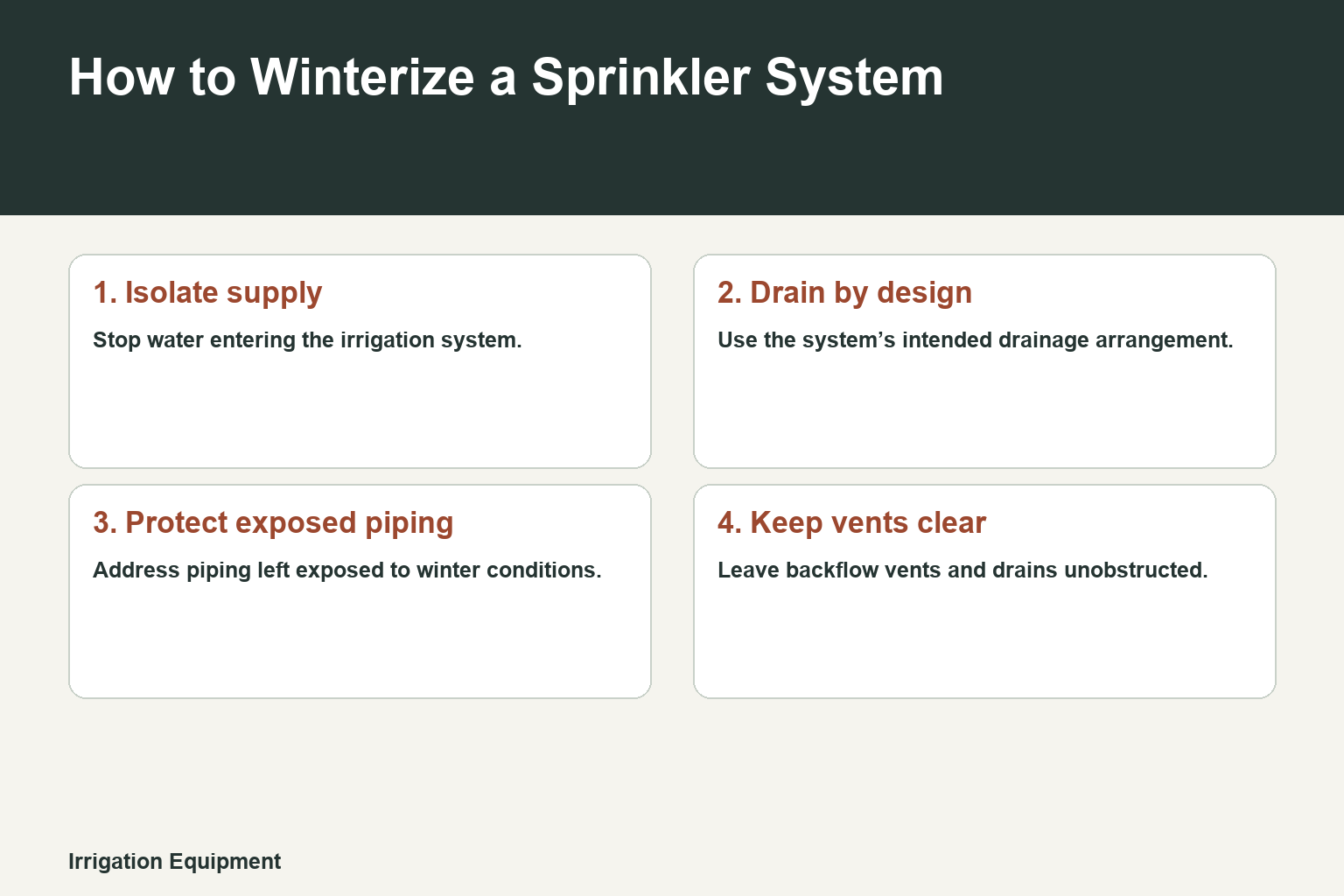
To winterize a sprinkler system, isolate the irrigation water supply, drain it by the method built into or specified for the system, and protect exposed piping. The correct drainage method varies by design; if compressed-air blowout is part of the plan, Rain Bird recommends having a specialist perform it.
I would make the drainage design the first decision, rather than assuming one shutoff or draining technique suits every yard. A short operating check before shutdown can also uncover delivery problems worth addressing before the system sits unused.
- Isolate supplyStop water entering the irrigation system.
- Drain by designUse the system’s intended drainage arrangement.
- Protect exposed pipingAddress piping left exposed to winter conditions.
- Keep vents clearLeave backflow vents and drains unobstructed.
The water supply is isolated first; drainage and protection then follow the system’s design rather than a universal procedure.
Start with the system’s drainage design
Drainage is the key variable. NRCS guidance calls for pipeline drainage where the manufacturer recommends it or where freezing is a hazard. That does not create a universal valve sequence, so identify the drainage arrangement used by your particular system before beginning.
Sources: USDA NRCS National Engineering Handbook, Part 652 Irrigation Guide
Choose the appropriate winterization path
Use the system’s installed provisions and condition to decide what is needed. Keep components that must vent or drain clear, and treat compressed air as a specialist procedure rather than a default DIY step.
| What to check | What it means | Practical direction |
|---|---|---|
| Drainage is recommended or freezing is a hazard | Pipeline drainage is needed | Identify and use the installed drainage arrangement. |
| Backflow vents or drains | They need to remain clear | Remove obstructions before shutdown. |
| Compressed-air blowout is considered | It is not a universal method | Use a specialist for the blowout. |
Sources: USDA NRCS National Engineering Handbook, Part 652 Irrigation Guide · Rain Bird: Winterizing Irrigation
Carry out the shutdown in the right order
First isolate the water feeding the irrigation system. Then use its intended drainage arrangement, protect any exposed piping, and keep backflow vents and drains unobstructed. This order separates stopping the water supply from removing water already within the system.
Sources: Rain Bird: Winterizing Irrigation
Use a brief operating check to spot maintenance issues
If you inspect the system before final shutdown, check pressure and discharge while all heads on the operating lateral are running. Comparing pressure on both sides of a filter can identify restrictions, while catch containers can reveal differences in distribution across the irrigated area.
| Observation | Possible meaning | How it helps |
|---|---|---|
| Different pressure on either side of a filter | A restriction may be present | It identifies a component needing attention. |
| Uneven results in catch containers | Water distribution varies across the area | It provides a comparison of spatial delivery. |
| Poor pressure or discharge at heads | Wear, clogs, leaks, or incompatible nozzle sizes may affect delivery | It narrows the inspection to likely causes. |
Sources: USDA NRCS National Engineering Handbook, Part 652 Irrigation Guide
Leave compressed-air blowout to a specialist
Some systems may use a compressed-air blowout, but the required method depends on the installation. Rain Bird recommends using a specialist for this work; do not substitute guessed compressor or pressure settings for system-specific service.
Sources: Rain Bird: Winterizing Irrigation
Frequently Asked Questions
Does every sprinkler system need compressed-air blowout?
No. The drainage method depends on the system design. If compressed-air blowout is part of your system’s plan, Rain Bird recommends a specialist.
What piping needs attention during winterization?
Protect exposed piping and make sure the system’s drainage provisions are used where freezing is a hazard or the manufacturer calls for drainage.
Why check the filter before shutting the system down?
A pressure comparison on either side of the filter can identify a restriction that may affect water delivery.
What can uneven sprinkler performance indicate?
Nozzle wear, clogging, leaks, or incompatible nozzle sizes can affect delivery. Catch containers can help compare how water is distributed across an area.
Final Thoughts
Begin by identifying your system’s intended drainage method, then isolate its water supply and protect exposed components. When the design calls for compressed-air blowout, arrange qualified service rather than improvising settings.