Drip irrigation is a way to apply water near plant roots rather than watering an entire area uniformly. Water is distributed along lines to emitters, but it is not a one-setting system: emitter placement and watering schedules should suit the soil and the plants. Filtration and appropriate pressure regulation are also part of a sound setup.
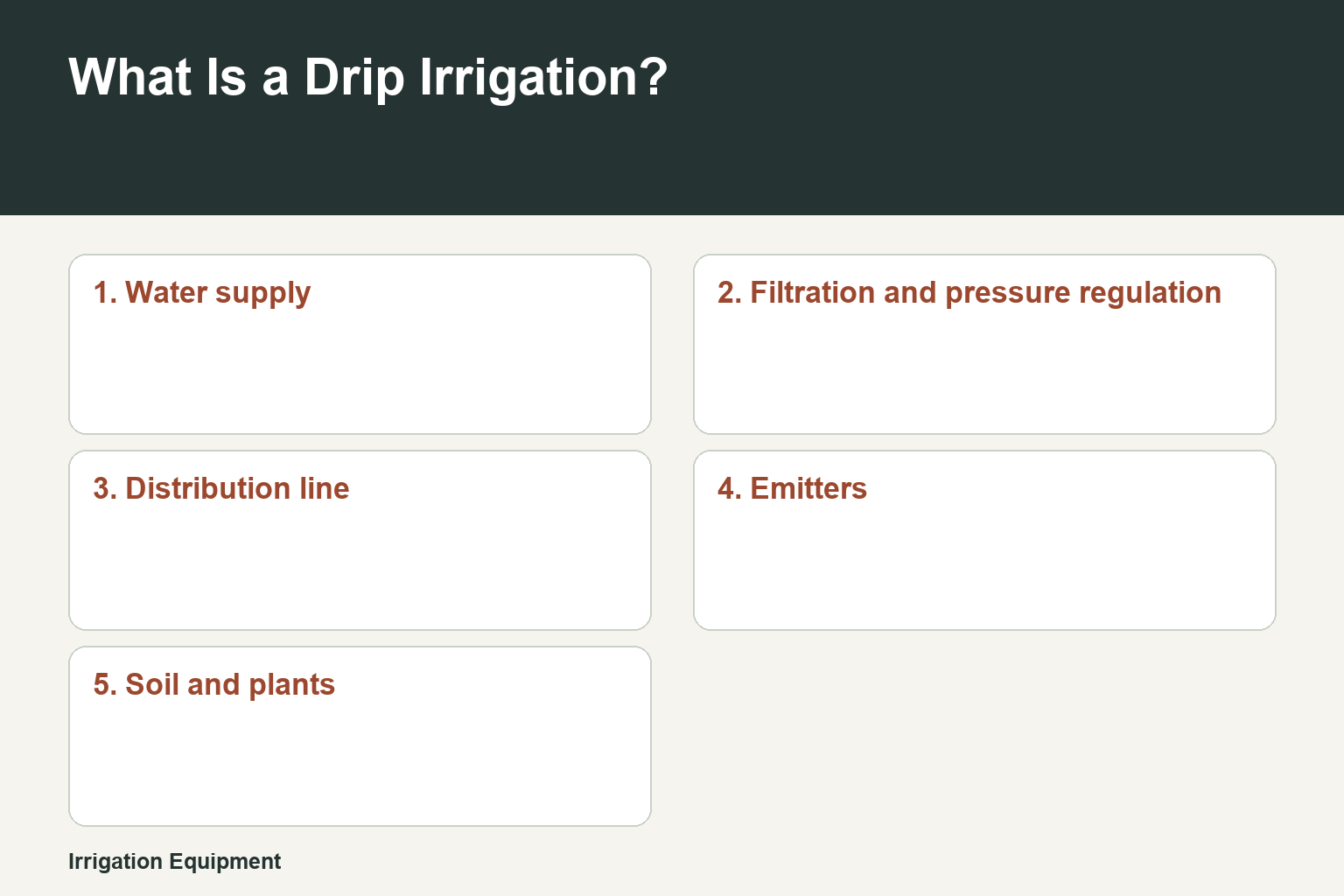
- Water supplyProvides water to the system.
- Filtration and pressure regulationEstablish the needed delivery conditions.
- Distribution lineCarries water along the planned layout.
- EmittersApply water near plant roots.
- Root-zone wettingWater spreads from each emitter through soil by capillary and gravity movement.
Water moves from the supply through controlled distribution components to emitters, then spreads through soil in the root zone.
The basic idea: targeted root-zone watering
A drip system concentrates application near the roots. Distribution tubing carries water to emitters, and their locations determine where it enters the soil. Water then spreads by capillary and gravity movement; wetting depends on soil, application duration, emitter flow, spacing, and plant root area. To me, the important distinction is that the layout is designed around root areas, not merely fitted with small outlets.
Sources: USDA NRCS National Engineering Handbook, Part 652, sections 652.0603 and 652.0900
Placement and scheduling are garden-specific
There is no universal emitter pattern or watering schedule. Individual point emitters suit spaced plants, while line emitters suit rows. Soil conditions and plant needs determine both emitter placement and scheduling, so those decisions belong in the layout plan.
| Garden layout | Emitter approach |
|---|---|
| Spaced plants | Point emitters target individual plants |
| Rows | Inline emitters provide regular spacing |
Sources: USDA NRCS National Engineering Handbook, Part 652, sections 652.0603 and 652.0900
Water delivery needs controlled conditions
Filtration protects the small passages in a drip system, while pressure regulation helps establish suitable delivery conditions. Pressure variation and elevation can affect uniformity, so these components should be considered with the specific layout rather than treated as identical in every system.
Sources: USDA NRCS National Engineering Handbook, Part 652, sections 652.0603 and 652.0900
Keep the layout within its intended capacity
Match total emitter demand to the available flow and the product limits for the system. A line is not endlessly extendable: its length and emitter load must remain within the intended capacity.
| System consideration | Practical implication |
|---|---|
| Filtration | Include it in the setup |
| Pressure regulation | Account for pressure variation and elevation |
| Line length and emitter load | Match demand to available flow and product limits |
Sources: USDA NRCS National Engineering Handbook, Part 652, sections 652.0603 and 652.0900
Frequently Asked Questions
When should I use point emitters instead of inline emitters?
Point emitters suit spaced plants, while inline emitters are suited to rows. Soil conditions and plant root areas still shape the final layout.
Can low-flow drip irrigation still overwater plants?
Yes. Low flow does not prevent overwatering or water moving below the root zone, so schedule duration for the soil and plants.
What should I inspect after a drip system is installed?
Check wetting below the soil surface and monitor for clogging, leaks, and rodent damage. Flush installation debris from the system.
Can plants with different needs share one irrigation zone?
Group plants with similar water needs, soil conditions, and sun exposure so one schedule can suit the zone.
Final Thoughts
Think of drip irrigation as root-zone watering with a deliberately planned layout: match emitter placement and scheduling to the garden, then keep filtration, pressure regulation, and line capacity in view.