
THE WATERING PLAN · EQUIPMENT GUIDE
A drip system needs pressure control that matches its tubing, emitters, and water source. These four regulators differ most in their target pressure, thread style, flow information, body material, and whether filtration is built into the unit.
For a hose-fed garden, a 25 PSI hose-thread regulator is often the direct route. A valve-box installation may call for a 1-inch connection and integrated filter instead. I would choose the connection format first, then confirm that the regulated pressure suits the components already in the system.
Top Drip Irrigation Pressure Regulators on the Market

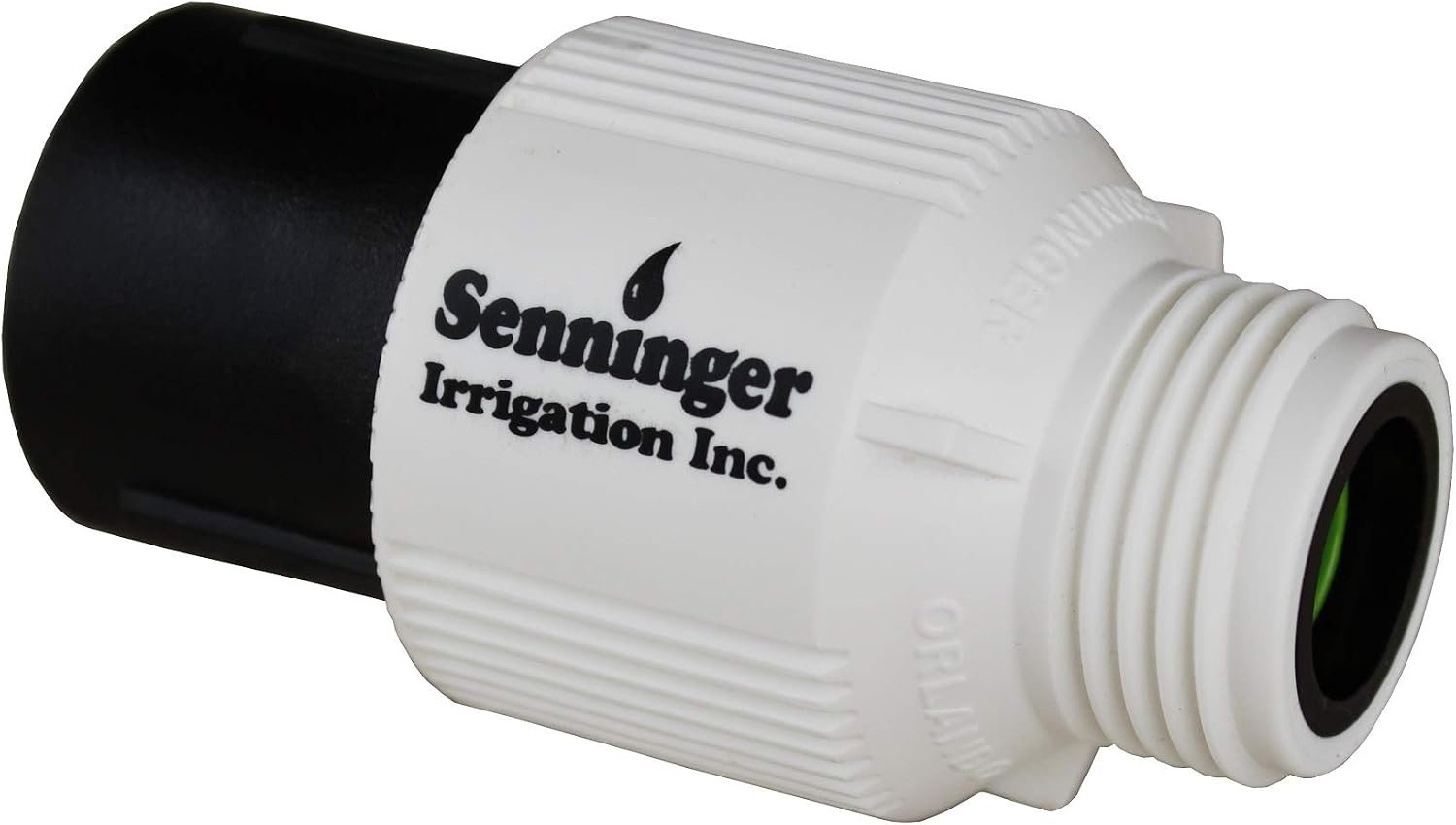
Senninger 25 PSI Hose-Thread Regulator
- 25 PSI regulated outlet pressure
- 0.5 to 7 GPM flow range
- 3/4-inch hose-thread inlet
- Above- or below-ground installation
- Engineering-grade thermoplastic body

Vibrant Yard 25 PSI Brass Regulator
- 25 PSI nominal regulated pressure
- 0 to 7.5 GPM flow rate
- 135 PSI maximum inlet pressure
- 3/4-inch female and male hose threads
- Solid lead-free brass body

Breezliy 25 PSI Regulators Two-Pack
- Two 25 PSI preset regulators
- 3/4-inch female and male hose threads
- 30 to 100 PSI compensation range
- High-strength ABS construction
- Suitable for above-grade installation

Orbit 67798 30 PSI Filter Regulator
- 30 PSI regulated pressure
- Integrated 120-mesh filter
- 1-inch MPT inlet connection
- 5 GPM flow rate
- Fits 17mm or 0.700-inch tubing
Drip Pressure Regulator Comparison Table
| Product | Best For | Regulated Pressure | Inlet Connection | Body Material | Flow Rate | Outlet Connection |
|---|---|---|---|---|---|---|
| Senninger 25 PSI Hose-Thread Regulator | For Below-Ground Installation | 25 PSI | 3/4″ Hose Thread | Not Specified | Not Specified | Not Specified |
| Vibrant Yard 25 PSI Brass Regulator | For Brass Hose Connections | 25 psi nominal | ¾” FHT (female hose thread) | solid lead-free brass | 0-7.5 GPM (gallons per minute) | ¾” MHT (male hose thread) |
| Breezliy 25 PSI Regulators Two-Pack | For Two Hose-Fed Zones | 25 PSI | ¾” FHT (female hose thread) | High-strength ABS construction | Not Specified | ¾” MHT (male hose thread) |
| Orbit 67798 30 PSI Filter Regulator | For Filtered Valve Connections | 30 PSI | 1″ MPT | Not Specified | 5 GPM | Not Specified |
Detailed Product Reviews
Senninger 25 PSI Hose-Thread Regulator
- Regulated Pressure
- 25 PSI
- Inlet Connection
- 3/4″ Hose Thread
- Flow Range
- 0.5 – 7 GPM
- Installation
- above or below ground
Advantages
- 25 PSI regulated pressure
- 0.5 to 7 GPM range
- Fits 3/4-inch hose threads
- Rated above or below ground
- No external metal parts
Limitations
- Dynamic pressure requires a flowing-water measurement
- Flow range begins at 0.5 GPM
I would choose the Senninger for a drip line, soaker hose, or low-flow zone that begins at a standard outdoor hose connection and needs a defined pressure target. Its 25 PSI regulated pressure is paired with a 0.5 – 7 GPM flow range, making it a relevant match for installations operating within that stated range. The 3/4-inch hose-thread inlet also keeps it aligned with common hose-bib and garden-hose connections.
Its installation rating is particularly useful when the regulator will not remain exposed beside a faucet. The engineering-grade thermoplastic body has no external metal parts, and it is specified for installation above or below ground. Pressure checks need to be done while water can continue flowing through the regulator. A gauge attached directly to its end blocks flow and reads static pressure rather than the regulated dynamic condition.
Compared with the Vibrant Yard Company regulator, the Senninger adds a stated above- or below-ground installation option, while the Vibrant Yard model has a solid lead-free brass body and a stated 135 PSI maximum inlet pressure. Choose Senninger when placement in the irrigation layout is the deciding issue. Choose the brass model when its higher stated inlet-pressure limit better matches the supply conditions.
Vibrant Yard 25 PSI Brass Regulator
- Regulated Pressure
- 25 psi nominal
- Inlet Connection
- ¾” FHT (female hose thread)
- Outlet Connection
- ¾” MHT (male hose thread)
- Flow Rate
- 0-7.5 GPM (gallons per minute)
- Maximum Inlet Pressure
- 135 psi
Advantages
- Solid lead-free brass body
- 135 PSI maximum inlet pressure
- 0 to 7.5 GPM flow rate
- Standard female-to-male hose threads
- Can connect with timer or filter
Limitations
- Closed outlet can slowly exceed 30 PSI
- Avoid prolonged aluminum-fitting connections
The Vibrant Yard Company regulator suits a hose-fed drip setup where a brass inline body and conventional hose-thread connections are priorities. It has a 135 PSI maximum inlet pressure and maintains 25 PSI nominal output within a stated 20 to 30 PSI range. The 3/4-inch female inlet and male outlet allow it to sit between a hose bib or garden hose and the downstream irrigation line.
This unit can be connected with an automated timer, backflow preventer, or filter, so it can fit into a modular hose-end assembly. Its 0-7.5 GPM flow rate covers the stated operating range without a listed minimum flow. One operating limitation matters when planning shutoff points. With the outlet completely closed, the outlet pressure may slowly build above 30 PSI. Avoid prolonged connection to aluminum hose fittings because of galvanic-corrosion concerns.
The Breezliy two-pack uses the same 3/4-inch female-to-male hose-thread format and is supplied as two regulators. The Vibrant Yard model instead distinguishes itself with solid lead-free brass construction and a stated 135 PSI maximum inlet pressure. I would select this one for a single hose-thread installation where those brass-body and inlet-pressure specifications matter more than receiving two units.
Breezliy 25 PSI Regulators Two-Pack
- Regulated Pressure
- 25 PSI
- Inlet Connection
- ¾” FHT (female hose thread)
- Outlet Connection
- ¾” MHT (male hose thread)
- Pressure Compensation Range
- 30-100 PSI
- Pack Count
- 2pcs
Advantages
- Two regulators in one pack
- 25 PSI preset pressure
- 3/4-inch hose-thread connections
- 30 to 100 PSI compensation range
- Can connect with timer or filter
Limitations
- Specified for above-grade installation
- ABS body instead of brass
The Breezliy pack makes the most sense when two separate hose-fed drip zones need the same preset pressure rather than when one system needs a specialized valve connection. Each regulator provides 25 PSI preset pressure and uses 3/4-inch female inlet and male outlet hose threads. That layout can connect at a standard hose bib or garden hose before a drip line, emitters, or micro-sprinkler setup.
The stated 30-100 PSI compensation range identifies the incoming-pressure range for this pressure-compensating function. The high-strength ABS construction is specified for above-grade placement, including a greenhouse or bubbler box. It can also be connected with an automated timer, backflow preventer, or filter. That gives a buyer flexibility in how the hose-end assembly is arranged without adding a second regulator for each of the two supplied zones.
Senninger’s 25 PSI model is sold as one regulator but is specifically rated for installation above or below ground. Breezliy supplies two regulators and focuses on above-grade uses. I would use Breezliy when two compatible hose-thread runs are being built at once. For a regulator that needs a stated below-ground installation rating, the Senninger is the better-supported choice.
Orbit 67798 30 PSI Filter Regulator
- Regulated Pressure
- 30 PSI
- Inlet Connection
- 1″ MPT
- Flow Rate
- 5 GPM
- Filter Mesh
- 120-Mesh Filter
- Tubing Compatibility
- 17mm or 0.700″ distribution tubing
Advantages
- Combines filter, regulator, and adapter
- 30 PSI regulated pressure
- Stainless steel 120-mesh filter
- Top-mounted flush port
- Fits 17mm or 0.700-inch tubing
Limitations
- Requires 1-inch MPT valve connection
- Regulates at 30 PSI, not 25 PSI
The Orbit 67798 is for a more integrated drip-zone connection rather than a simple hose-bib regulator. It combines a filter, pressure regulator, and Drip-Lock adapter in one body. The 120-Mesh Filter is stainless steel and has a top-mounted flush port, while the regulator reduces pressure to 30 PSI. This design reduces the number of separate connections between the valve and distribution tubing.
Its 1-inch MPT inlet is intended to connect directly to a 1-inch FPT irrigation valve. The straight body is designed for standard rectangular valve boxes, and the unit maintains a specified 5 GPM flow rate. Downstream, the built-in Drip-Lock adapter accepts 17mm or 0.700-inch distribution tubing. That compatibility is the key reason to choose it when the zone is built around those tubing sizes.
Unlike the Senninger regulator, Orbit uses a 1-inch valve connection and includes filtration plus a tubing adapter, but it regulates to 30 PSI rather than 25 PSI. The Senninger is the better match for a 3/4-inch hose-thread installation seeking 25 PSI. Choose Orbit when connecting directly to a compatible irrigation valve and 17mm or 0.700-inch distribution tubing is more important than a hose-end format.
How to Choose a Drip Irrigation Pressure Regulator
Start with the connection at the water source and the pressure required by the downstream drip components. A regulator is not a universal substitute for a filter, timer, backflow device, or tubing adapter unless those functions are specifically built into the model.
Match the Pressure Setting
Use the pressure setting specified for the drip tubing, emitters, or micro-sprinklers in the zone. A 25 PSI regulator and a 30 PSI regulator are not interchangeable merely because both reduce household water pressure. Pressure regulation applies while water is flowing, so a static gauge reading at a closed outlet does not necessarily show the operating pressure delivered through an active system.
Confirm Both Connections
Check the inlet and outlet thread formats before buying. Hose-thread regulators commonly connect to a hose bib, garden hose, or hose-end timer. A regulator with a 1-inch male pipe-thread inlet is intended for a compatible irrigation-valve connection instead. Confirm the downstream connection too, especially when a unit includes a proprietary-style tubing adapter.
Size for Zone Flow
Add the expected water demand of the emitters or devices that run at the same time, then keep that demand within the regulator’s stated flow range or flow rate. A regulator sized for a low-flow drip zone may not suit a larger zone simply because it has the same pressure setting. Keep separate zones independently regulated when their operating needs differ.
Decide on Filtration
Filtration protects small drip passages from debris, but not every regulator includes a filter. If the chosen regulator does not have one, plan the system so filtration is handled elsewhere where appropriate. An integrated filter can reduce connection points, while a separate filter can be useful when the rest of the assembly is already standardized around individual components.
Plan the Installation Location
Choose a model with an installation rating that fits where it will live. A hose-end setup beside a faucet has different needs than a regulator located in a valve box or buried portion of an irrigation layout. Also consider access for flushing or maintenance before placing components where they are difficult to reach.
How We Evaluated Drip Irrigation Pressure Regulators
I prioritized the regulated pressure, stated flow capacity or range, inlet and outlet compatibility, installation format, and whether filtration or tubing adaptation is integrated. The recommendations separate hose-fed garden systems from valve-connected irrigation zones because their connections and downstream setup requirements differ. Material and pack count are included only where they change the purchase case.
Frequently Asked Questions
Do I need a pressure regulator for drip irrigation?
Use one when the water source pressure is higher or less controlled than the pressure specified for the drip components. The regulator should match the system’s required operating pressure and expected zone flow. It does not replace checking that the tubing and emitters are compatible with that pressure.
What is the difference between 25 PSI and 30 PSI?
They are different regulated outlet-pressure targets. Choose the setting that matches the requirements of the drip tubing, emitters, or micro-sprinklers in the zone. Do not select a setting based only on the water source or on the assumption that a higher number will improve a drip system.
Can a hose-thread regulator connect to a garden hose?
Yes, when it has compatible garden-hose threads. Check whether the inlet is female hose thread and whether the outlet is male hose thread, then confirm the fittings on the hose, timer, filter, and downstream line. Pipe threads and hose threads are different connection formats.
Why does flow range matter for a regulator?
The regulator needs to operate within its stated flow range or rate while the zone is running. Estimate the total demand of the components that operate simultaneously. If the zone demand exceeds the stated capacity, redesigning the zone or using another appropriately specified regulator may be necessary.
Is an integrated filter worth choosing?
It can be worthwhile when connecting a valve directly to distribution tubing and reducing separate joints is a priority. A filter with an accessible flush port can also simplify routine cleaning. If a system already has a suitable filter, a regulator-only model may fit the existing assembly better.
Can I test regulator pressure with a gauge?
Test under flowing conditions when assessing a dynamic-pressure regulator. A gauge installed in a way that blocks water flow reads static pressure, which is not the same condition as water moving through the regulator and irrigation line. Place the gauge so water can continue flowing through the system.
Final Thoughts
For a conventional 3/4-inch hose-thread drip setup, the Senninger is my main recommendation because it combines a 25 PSI setting, a stated 0.5 to 7 GPM range, and above- or below-ground installation. Choose the Vibrant Yard Company model for its brass body and stated 135 PSI maximum inlet pressure, or the Breezliy pack when two above-grade hose-fed zones need matching regulators. The Orbit 67798 is the better fit for a 1-inch valve connection that also needs filtration and a compatible tubing adapter.